Digital Barmecide.
This work investigates the precariousness of home in others by reimagining perceptions of origin, displacement, and belonging. The repurposing of trace materials left behind by others showcases how we relate objects to identity. By examining long-distance relationships and the ‘made’ family, I’ve steadily unraveled the embedded fibers of codependency and reinterpreted the politics of belonging.
-
Digital Barmecide is an installation dedicated to depicting the precariousness of home and the prolonged effects of social isolation. The work intervenes with my partner and my two-year geographical separation, and the struggles we encountered to make the distance work. In an era where geographic permanence is becoming less than ideal, digital technology closes the gap and simultaneously blurs it. As my partner and I diligently kept up with communication, we found ourselves steadily becoming uninterested and eventually estranged to each other. Moreover, we were changing physically, emotionally, and finding new friend groups --even love interests-- that served our immediate needs. Archived loved letters, text, and video performance articulate these frustrations and evince the process of cutting and mending ties. Through examining long-distance relationships and the ‘made’ family, I have steadily unravelled the embedded fibres of codependency and reinterpreted the politics of belonging.
-
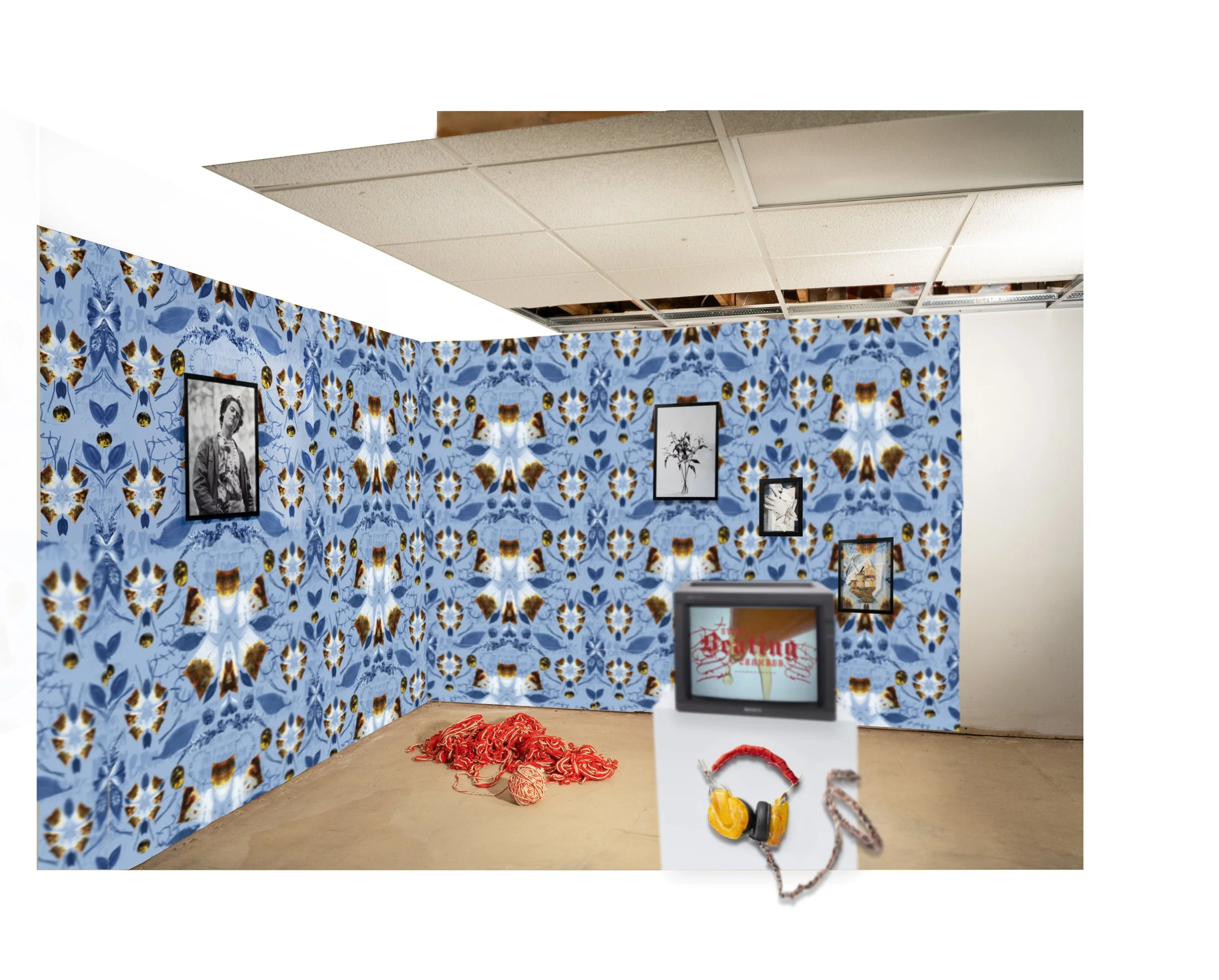
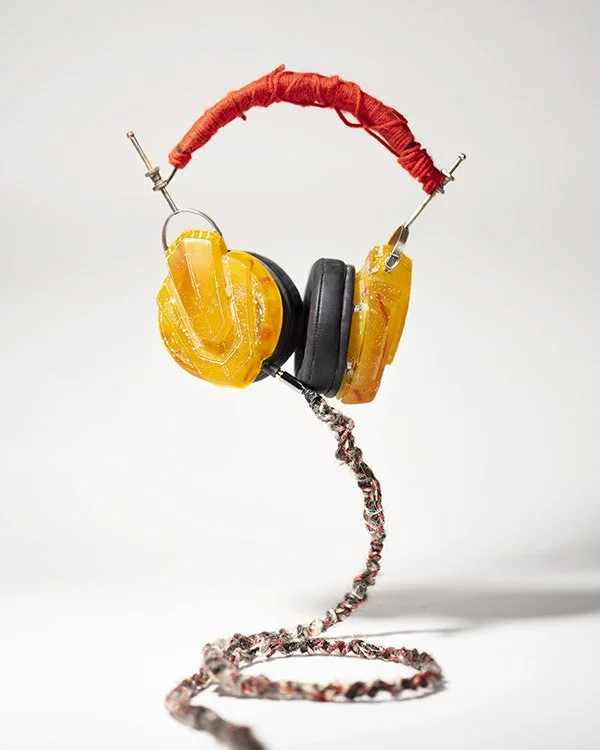
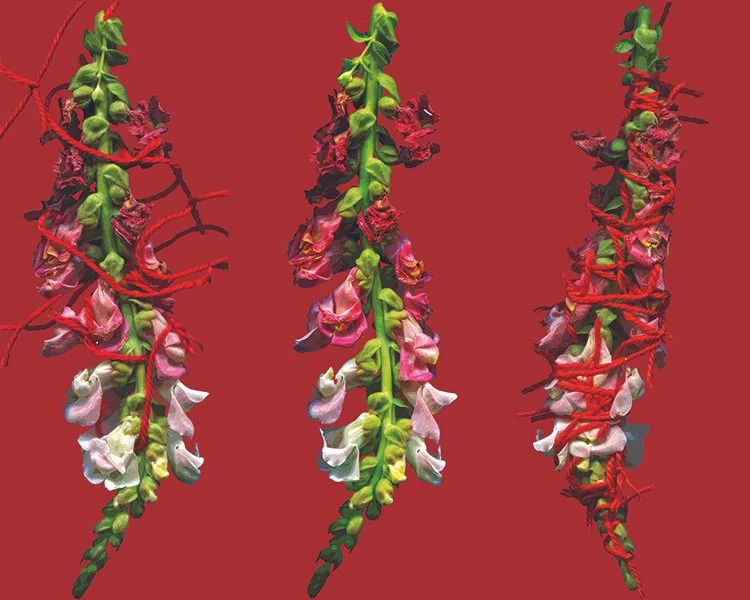
Fibre of Being, the crafted headphones, illustrate the process of mending, as the audio cord was spun from the hair of my partner and me. I saw this process as a literal labour in love and an effort to restitch the fabric of our relationship back together. Historically speaking, correspondence between lovers is congruent with modes of communication. Fibre of Being exercises a point of contingency where the viewer must don the headphones in order to experience the transference of my love letter to my partner through the performance, Still Beating Chamber. Wrapped in threads, my body is constricted by the burden of connection, and the lengths tighten as I frantically try to escape.
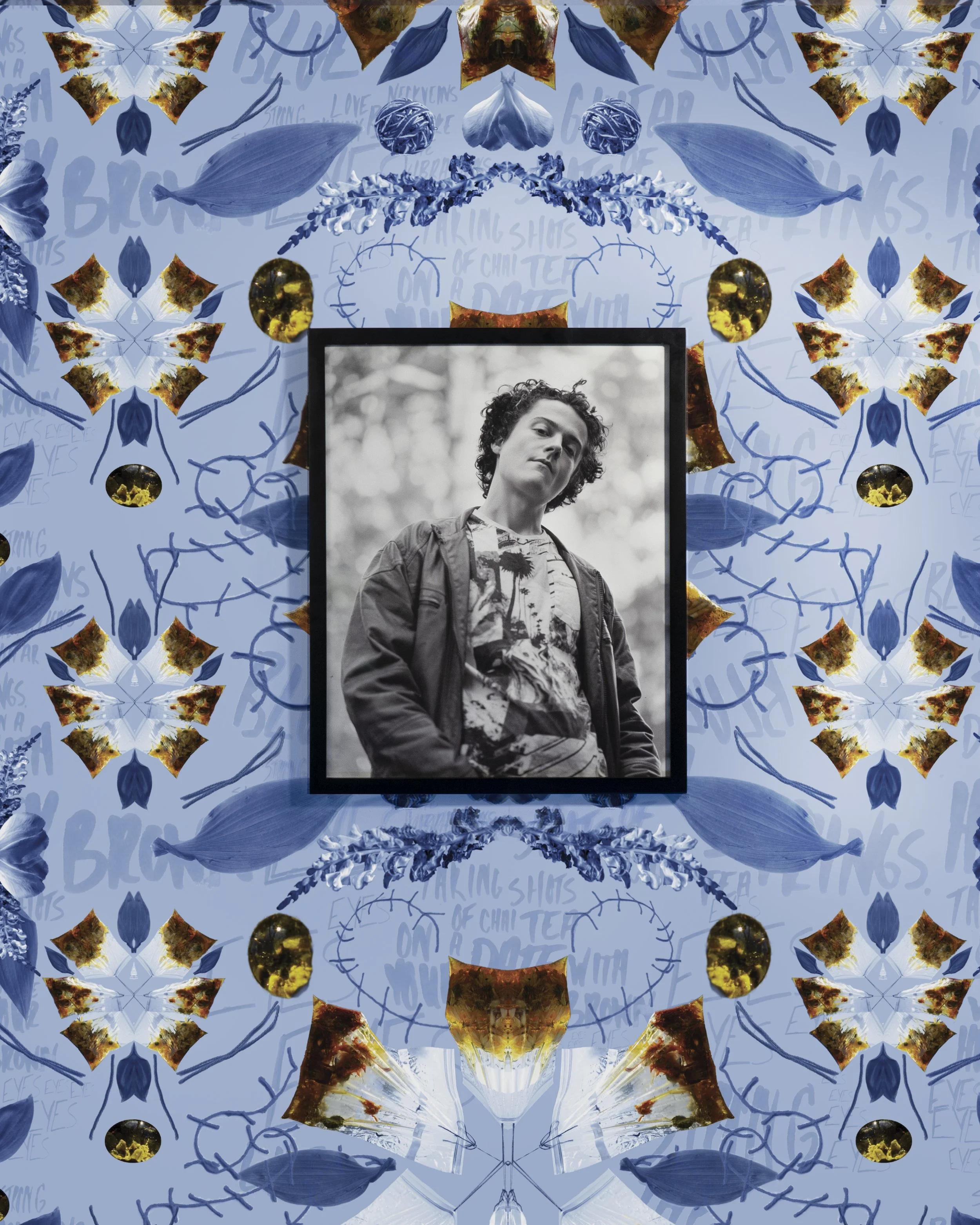
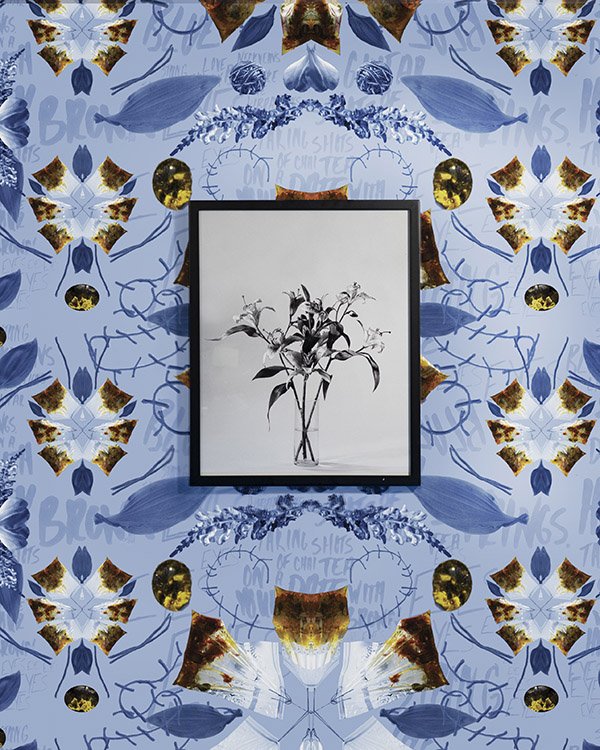
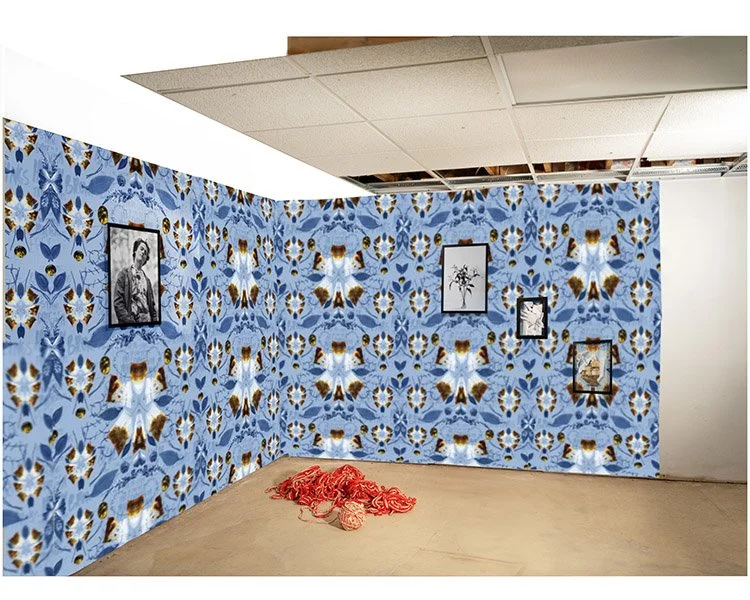
The manifestation of “Fam”, She Exclaimed emblemizes the family of people I met during my two-year stay in Cincinnati. To commemorate their impact in my life and relationship, I collected trace or residual items (cigarette butts, flower petals, bottlecaps etc) from these people in moments where I felt most connected. The items were put into individual bags with names for the corresponding individual and filled with honey to illustrate their sweetness. While “Fam”, She Exclaimed acts as a backdrop, the photographs titled, Somebody’s Somebody and Shy of a Bundle, protrude outward. This was done to represent how I prioritized my partner over others and how thin the distance is for me and others to slip away into the background of new relationships. The placement of these images over the wallpaper implies hierarchy and generates a stark contrast between not only colour but the subject matter. The characteristic of clarity, in black and white photography, is utilized ironically here to contradict the frustrations of non-proximal relations, where no decision is black and white, clear-cut, or simple. -
In terms of the effects of social isolation, whether it be from NPRs or the pandemic, the biggest hurdle is overcoming loss. From all accounts of personal experience that are embedded in this thesis, loss is by far the most malleable and devastating. Loss can take away the right to pursue happiness and result in a victim mentality that perpetually creates roadblocks. In the state of current affairs (the 2020 presidential election, the civil rights movement, police brutality, and Covid-19) it is vitally important to recognize individual loss and moderate how we hold others accountable. Hosea Jan "Ze" Frank, online performance artist and comedian addressed victim mentality briefly in a video called, An Invocation for New Beginnings. Succinctly, he says this in the video, “Let me not be so vain to think that I’m the sole author of my victories and a victim of my defeats”, (Frank, 2012). As previously mentioned, holding a victim mentality is polarizing; it disproportionately depicts others, in the spectacle of malintent, as the cause of individual defeat. We cannot afford the level of self-sabotage at present because there is too much going on, too many people affected and too much access to social networks for others not to receive the help they so desperately need.
On some level everyone is dealing with problems associated with the pandemic. Digital Barmecide is concerned with social isolation and its long term effects. Social media and online networks are a great way to maintain connections with loved ones, friends, and employers during the crisis. This research emphasizes the use of those tools for reaching out to others during this difficult time. Incidentally, this research also advises that these tools be used with precaution and not as an absolute substitution for physical, social interaction. Frequent use of communications technologies as a prime mode for social interaction can cause warped perceptions of time or distance, dysfunctional object constancy, and desensitization. When you come down to it, good ol fashioned, in-person encounters are going to be the best option for success.

How can Non-Proximal Relationships inform upon Social Distancing practices?
A meta-analysis and systematic review on social relationships and mortality risks was published in 2010. The review was a collaborative effort conducted to determine the amount of influence social relationships have on mortality risks. The study linked social isolation to a 29% increased risk for mortality (Social Relationships, 2010) and found the influence of social relationships on risks to death to be comparable with other fatal risks like smoking and drinking.
“Such findings suggest that despite increases in technology and globalization that would presumably foster social connections, people are becoming increasingly more socially isolated. Given these trends, understanding the nature and extent of the association between social relationships and mortality is of increased temporal importance”